Lai Administration's High-Profile Stance Demands Concern
By Cheng Shih-ting, United Daily News Opinion, August 7, 2026
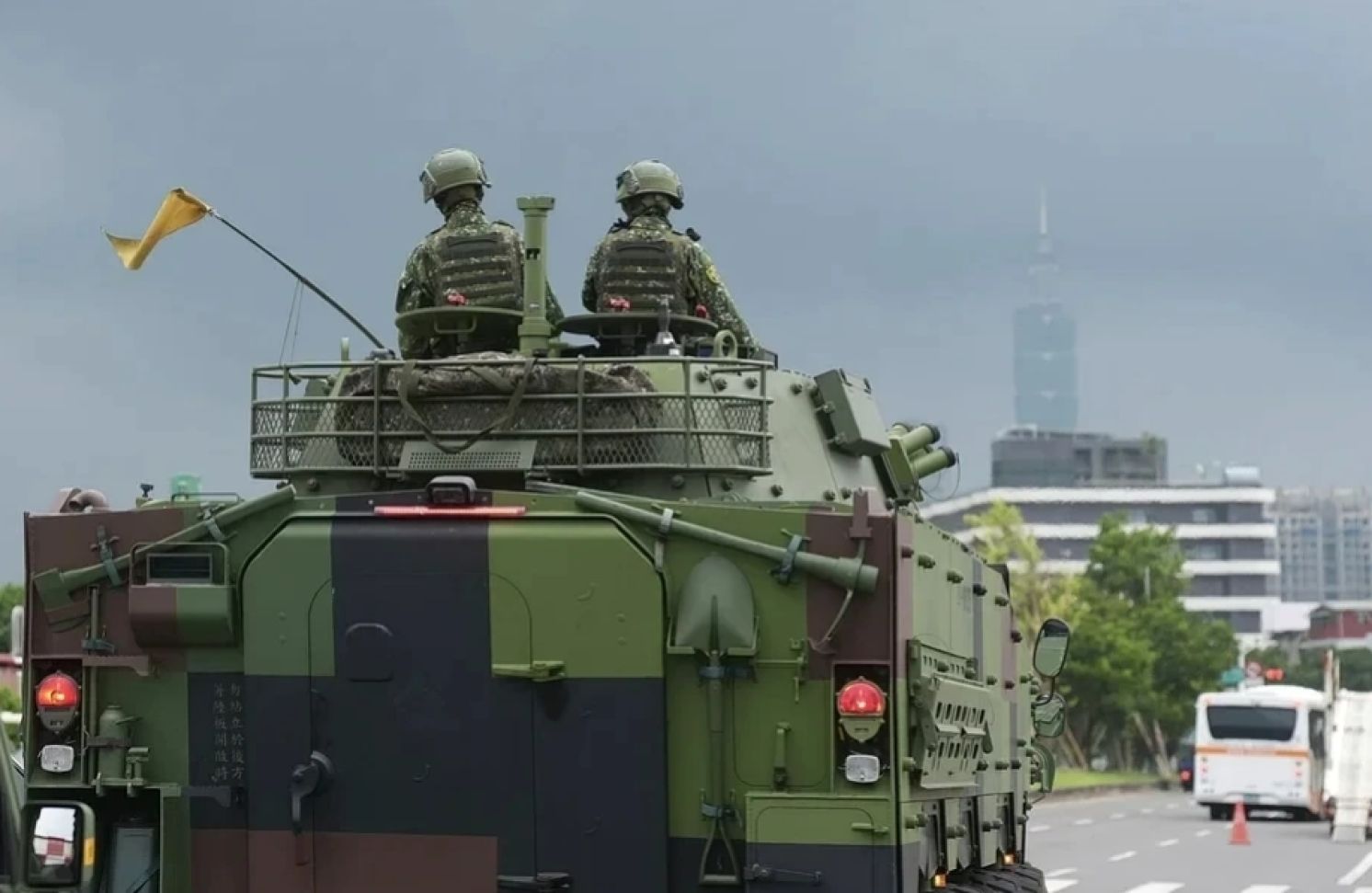
In recent military exercises and training conducted by the Armed Forces, American personnel have frequently been seen on site, earning the joking nickname of "English teachers." Minister of National Defense Wellington Koo has even made the rare public confirmation that U.S.-Taiwan military cooperation and exchanges "far exceed public imagination." Security cooperation between Taiwan and the United States has existed for many years and has traditionally been handled with discretion. The government's decision to publicize it now clearly carries a specific message: to signal to the outside world, particularly Beijing, that U.S.-Taiwan relations remain strong.
Whether such an approach truly serves Taiwan's long-term interests, however, is open to debate. Military cooperation between Taiwan and the United States has traditionally been a sensitive area where actions mattered more than words. The more openly it is publicized, the more likely it is to provoke a backlash from Beijing or even be perceived as a provocation, providing justification for intensified political attacks and military intimidation against Taiwan. Although China's Ministry of National Defense has never officially declared that "the stationing of U.S. troops in Taiwan means war" as a red line, Hu Xijin, the former editor-in-chief of the Global Times, has repeatedly issued such warnings over the years. This narrative has become deeply rooted in public discourse across the Taiwan Strait, reflecting the high level of nationalist sensitivity surrounding American military presence in Taiwan.
Even if the leadership in Zhongnanhai currently remains inclined to rely on diplomacy and gray-zone tactics rather than direct military conflict in addressing cross-strait issues, the populist pressure generated by such sentiments could place decision-makers in an increasingly difficult position, forcing them to adopt a tougher stance and thereby fueling a further escalation of hostile actions.
Diplomatic and defense cooperation should adhere to the principle of "doing more than saying," building real military capabilities to strengthen deterrence rather than seeking political attention through public displays. The government's recent series of high-profile statements may also be related to the domestic political environment. As controversies surrounding governance and economic and livelihood issues continue to intensify, redirecting public attention toward "Chinese Communist pressure on Taiwan" can indeed help consolidate political support while diverting attention from domestic challenges. This is also consistent with the ruling party's long-standing political strategy.
In addition, there is another aspect of the warming U.S.-Taiwan relationship that must be honestly acknowledged: the issue of costs. The Trump administration has consistently approached relations with allies in a direct and pragmatic manner. While the United States provides market access, technology, security guarantees, and international support, it has often expected—or even required—its partners to bear corresponding costs. These may take the form of higher defense spending, purchases of specific weapons systems, energy procurement, increased investment in the United States, tariff concessions, or even the relocation of semiconductor production capacity and talent to the United States.
The more openly U.S.-Taiwan security cooperation is promoted, the more effectively it may convey a deterrent signal to Beijing. At the same time, however, it also becomes easier for Washington to use it as leverage in negotiations with Taiwan. Beijing may see provocation, while Washington may instead conclude that "since the United States has already provided security services, Taiwan should naturally pay more." Taiwan is not without bargaining chips; its leadership in semiconductors and global supply chains remains an important source of negotiating leverage. Yet unless Taiwan carefully calculates what it has gained and what it has given up, openly publicizing U.S.-Taiwan military cooperation could leave the country simultaneously facing military pressure from Beijing and mounting demands from Washington, placing Taiwan in the difficult position of confronting pressure from both sides.
If foreign and security policy becomes merely a tool for election rhetoric and political mobilization, then it is ultimately the people of Taiwan—not the policymakers themselves—who will bear the risks. Regional peace and stability have been achieved only with great difficulty. In handling U.S.-Taiwan military cooperation, the government should therefore adhere to the principles of prudence, pragmatism, and discretion, rather than seeking short-term political gains by "showcasing its American English instructors." Only by doing so can Taiwan safeguard its long-term security interests.
The author is a researcher from New Taipei City.